Pont Marie
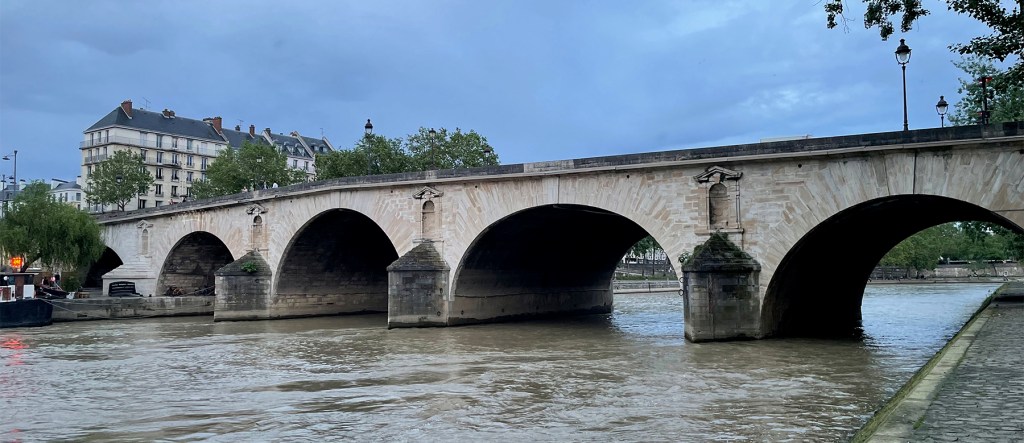
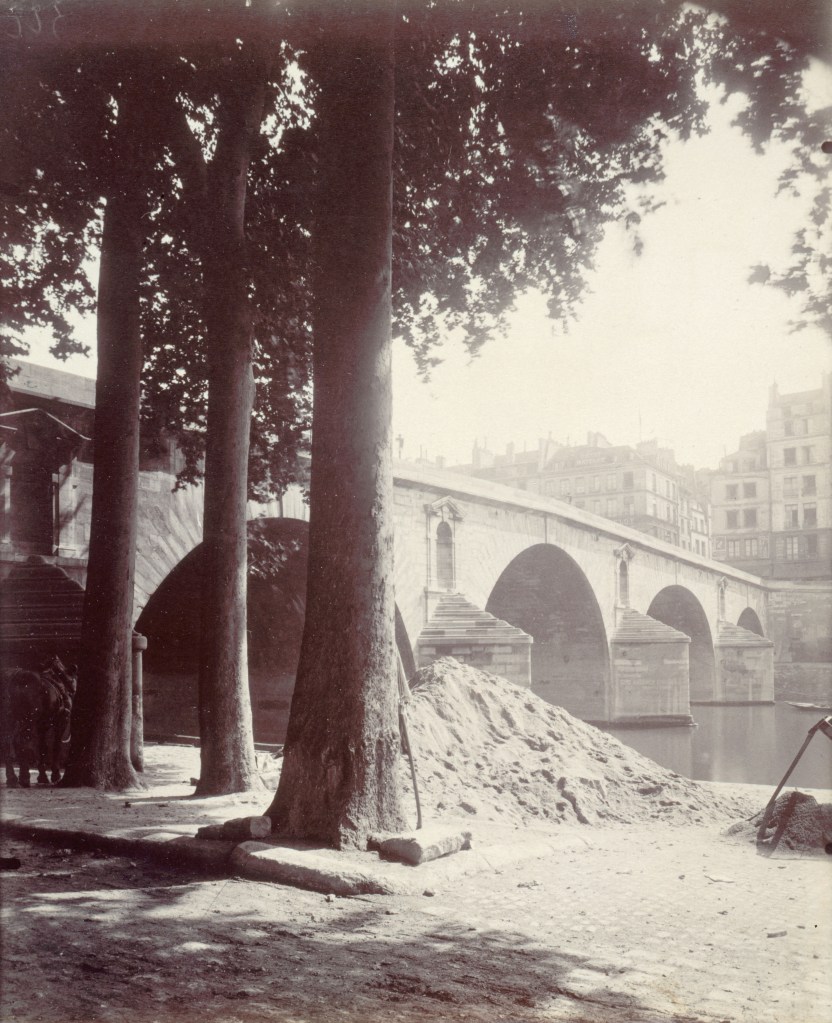
The first stone for Pont Marie, the second oldest surviving bridge in Paris, was dedicated on the 11th of October 1614 by Louis XIII (b. 1601- d. 1643) in the presence of his mother, Marie de’ Médici, who was acting as regent of France from 1610-1617. The bridge took 21 years to build using local Lutetian limestone, and it was completed in 1635.
The bridge, approximately 300 feet long and 72 feet wide, spans the Seine and links Rue des Nonnains d’Hyères on the right bank to Rue des Deux Ponts on the island.
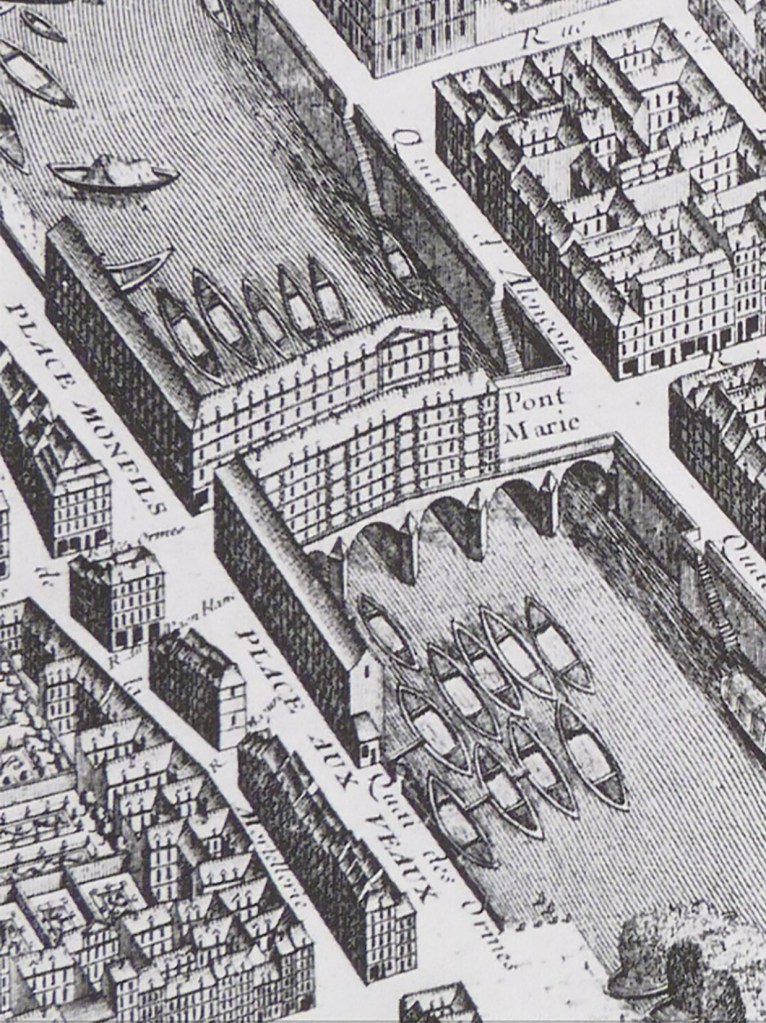
The bridge originally supported rows of houses paralleling one another along its length and connecting at right angles to rows of houses along the quais on the right bank. Businesses occupied the ground floor of the houses with upper floors reserved for small residences.
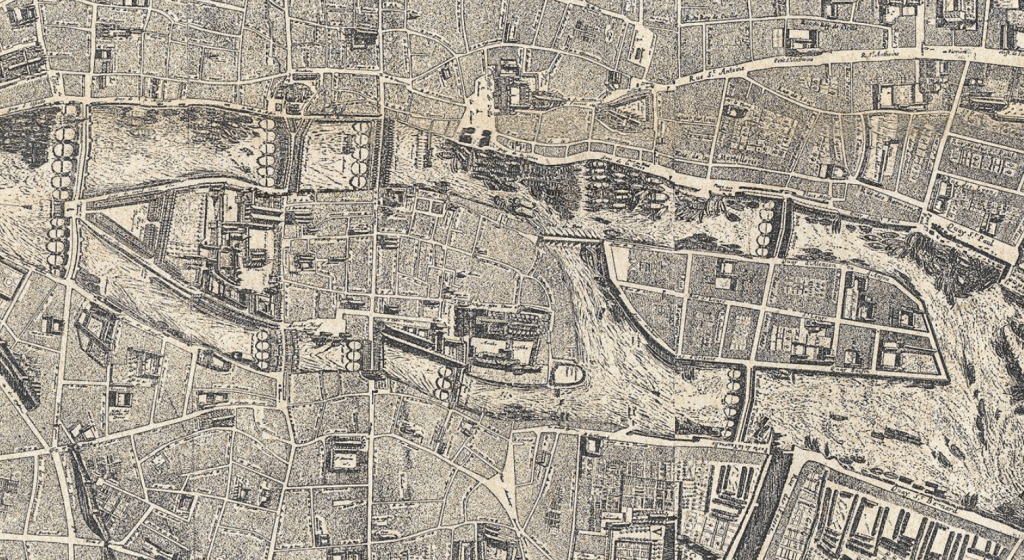
Pont Marie was the first stone bridge to link Île Notre Dame to the right bank and was built by and named after Christophe Marie who was the chief architect of the plan to develop the land on the island and link it to the left and right banks of the Seine.
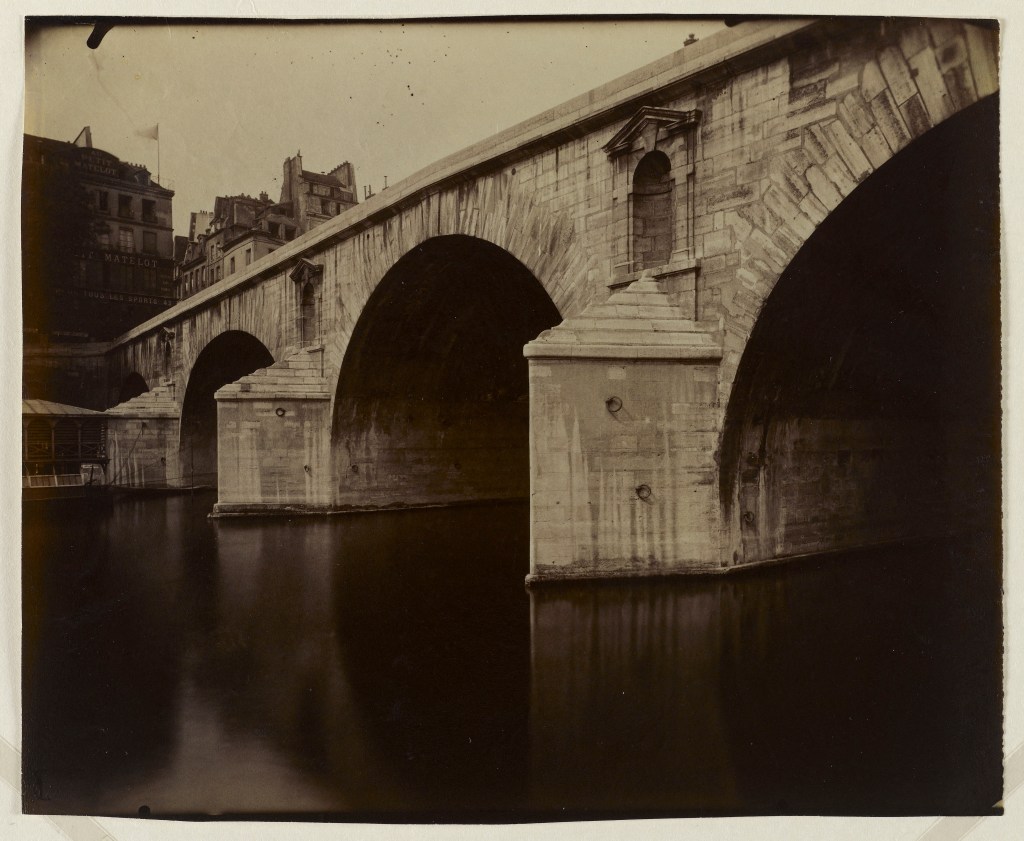
Though the bridge was completed in 1635, it was destroyed by a flood 2 years later in 1637. It was quickly rebuilt, but on the 1st of March, 1658 the bridge was inundated by a flood which swept away the 2 arches closest to the island and the 22 houses atop them. Almost 60 people perished in the disaster. A wooden span was quickly built to replace the missing stone spans, and a toll was charged for a period of ten years in order to finance rebuilding the missing portion of the bridge. The work to replace the missing arches was not completed until 1664, and houses were not rebuilt on the newly constructed spans. The surviving houses remained on the bridge until 1786 when Louis XVI (b. 1754, d. 1793) issued a royal edict ordering the removal of houses on all of Paris’ bridges.
The bridge remained virtually unchanged until it underwent some restoration work in the mid-19th century. The rise of the bridge was slightly flattened at that time. One of the most interesting features of the bridge are its angled ice aprons which functioned to protect the piers of the bridge from the impact and pressure of floating ice.
 L'Île Saint-Louis