Pont de la Tournelle
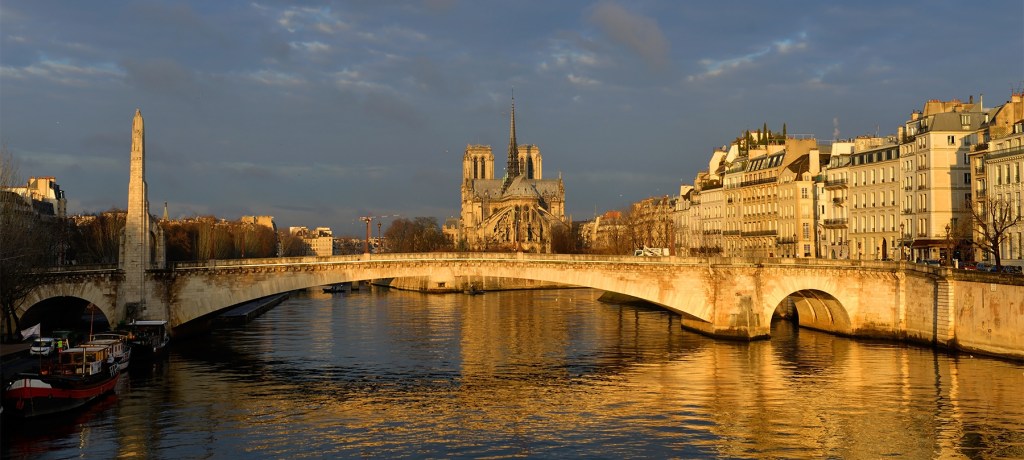
The current Pont de la Tournelle dates to 1928, but there have been many spans crossing the Seine at that location dating back to before the Middle Ages when Pont de fust de l’Isle Notre-Dame was constructed out of wood on the site of the current bridge. Pont de fust d’emprest Saint-Bernard aux Barres followed shortly after. These two footbridges, which disappeared under Francis I (b. 1494, d. 1547), were destroyed by flooding like many other bridges of the time.
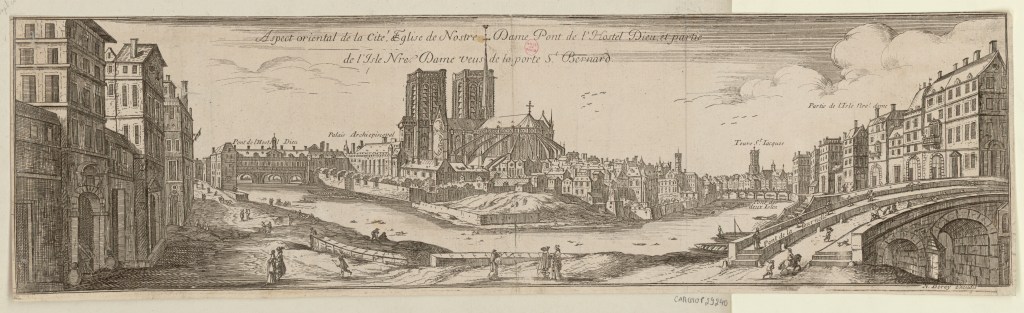
The bridge’s name is linked to the former tower on the left bank of the Seine where Philippe Auguste’s (b. 1165, d. 1223) fortified walls protecting the city ended in a tower on the banks of the river.
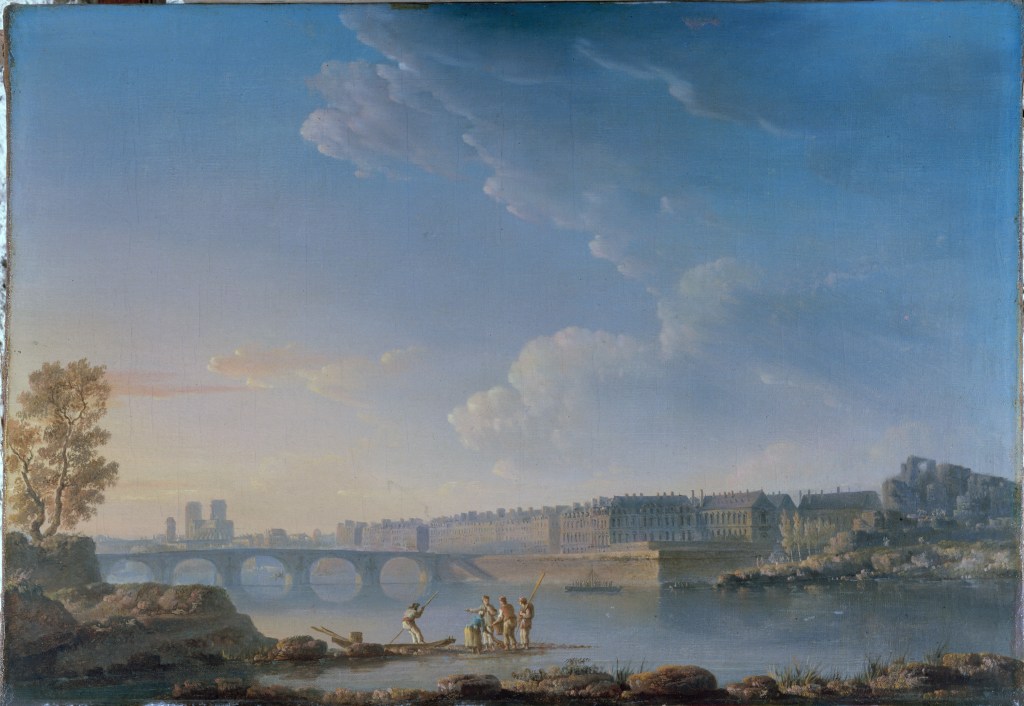
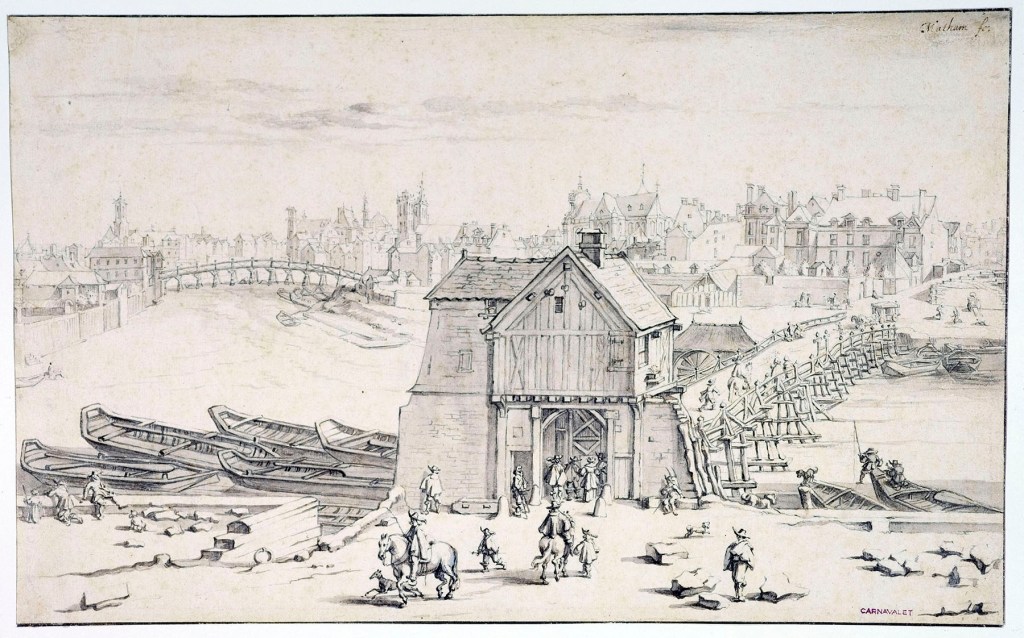
There have been a series of bridges on that site since then, with the development of Île Notre Dame/Île Saint-Louis in the 17th century seeing a succession of spans. Research reveals a wooden bridge on the site during the early days of the island’s urbanization in 1614. A new bridge was begun at that time and completed in 1636. That bridge was destroyed by flood in 1637, rebuilt by 1648 and then destroyed by flood again in 1651. The sketch by Théodor Dirck Matham below shows the tollbooth at the end of Pont de la Tournelle around 1630. It was common practice for bridges in the city to have tollbooths until the 19th century.
The bridge was finally rebuilt in stone in 1656. It was then enlarged and sidewalks were added in the 1850’s.
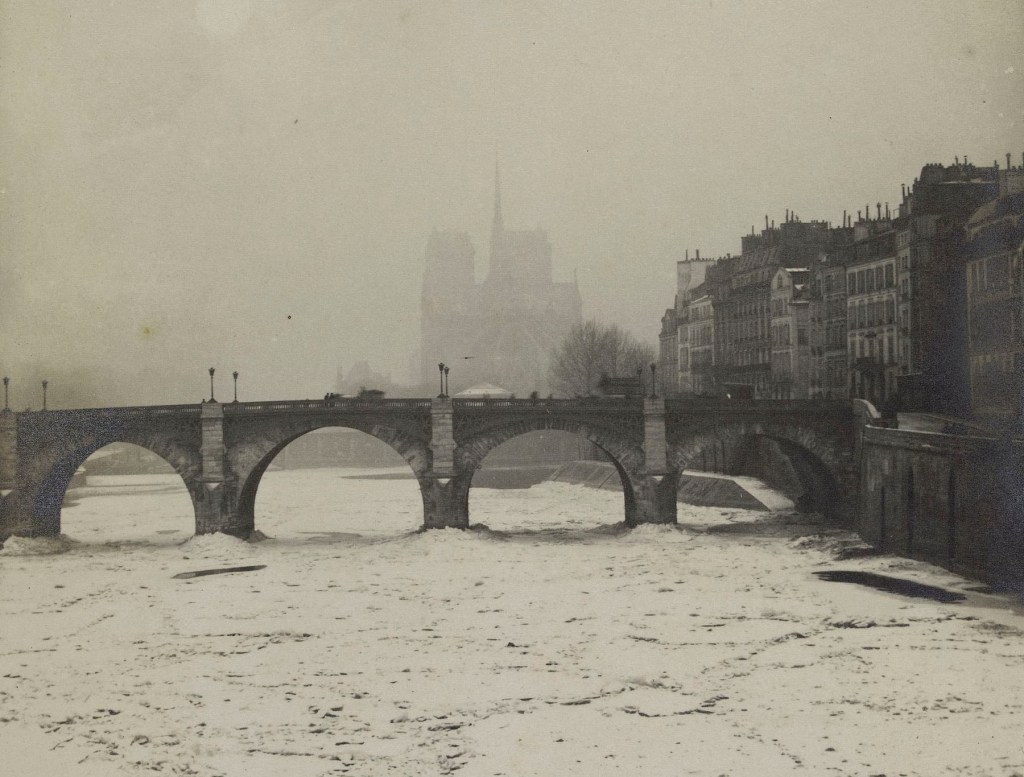
The bridge was destroyed again by the great flood of Paris in 1910 when the river rose by more than 26 feet.
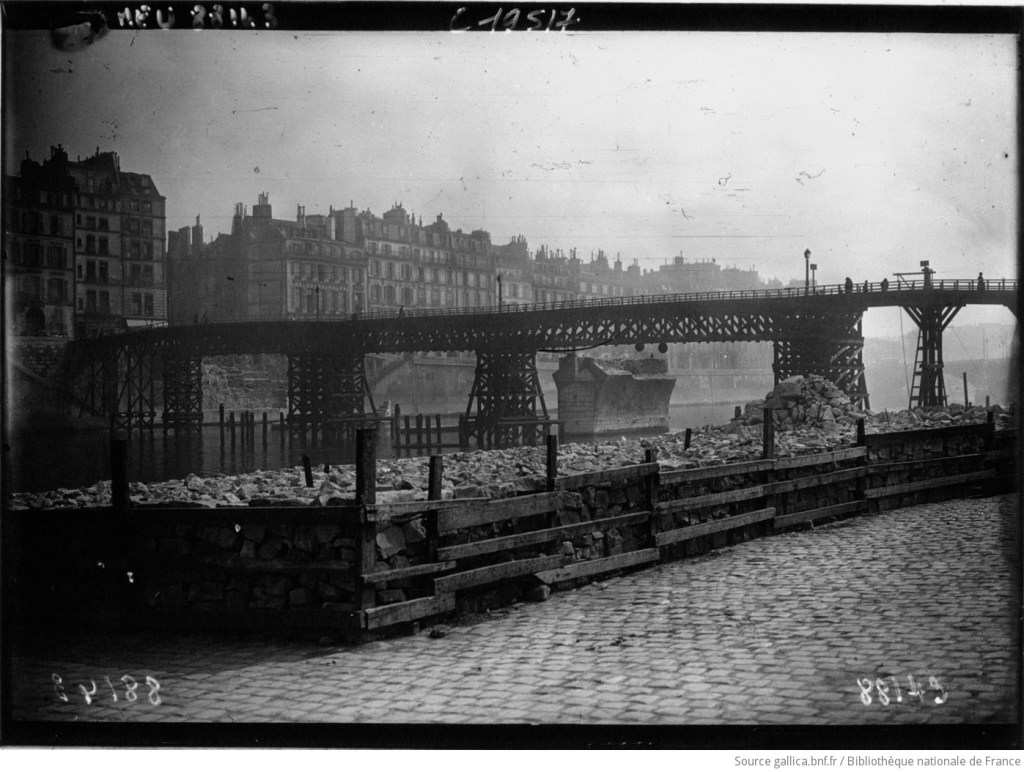
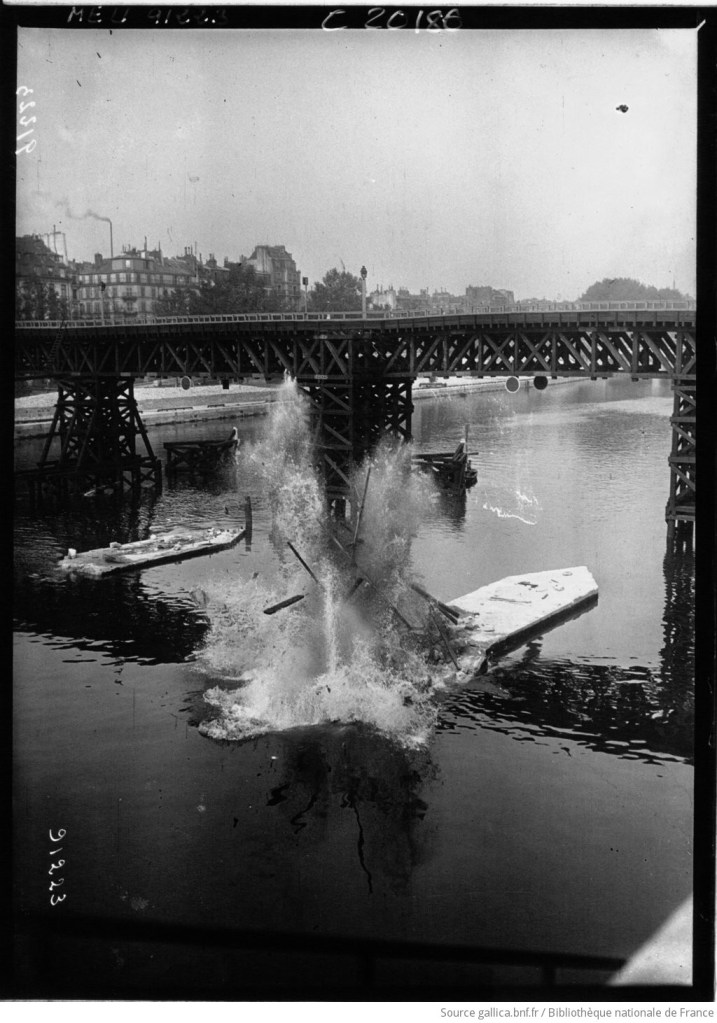
The flood lasted 2 months and caused such severe damage that the bridge was demolished in 1918 and was replaced by the current span which was completed in 1928.
The current Pont de la Tournelle is notable for its statue of Saint Geneviève facing upstream recalling a shrine to the patron saint of Paris which stood near that spot dating back to the Norman invasion of Paris in 885. Paul Landowski’s 40 tonne Souppes stone statue of Saint Geneviève was the result of a an architectural competition for the decoration of the bridge.
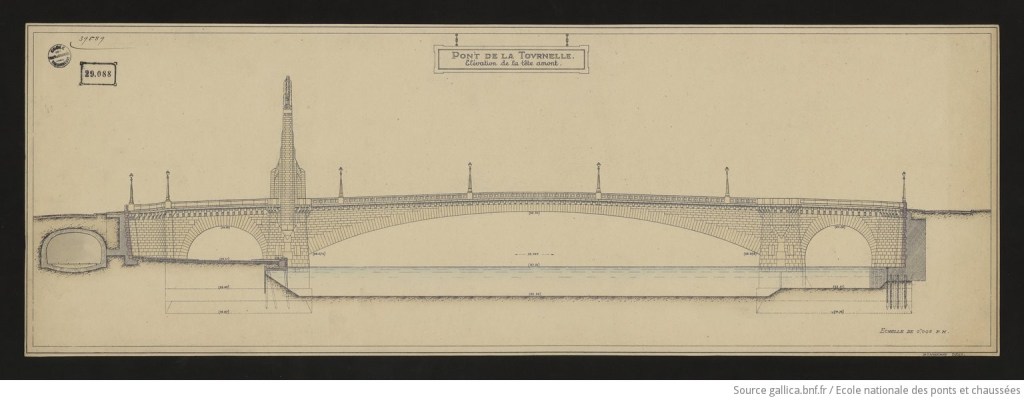
The orientation of the statue was the subject of much debate. Landowski believed it should face Notre Dame where it would be better viewed, but the winners of the competition, the Guidetti brothers, believed the statue, depicting Saint Geneviève protecting a young child and clutching a ship representing the city of Paris to her chest, should face upstream as she would have in the face of invading forces. The ensuing drama resulted in the sculptor not attending the inauguration of the bridge on August 27, 1928.
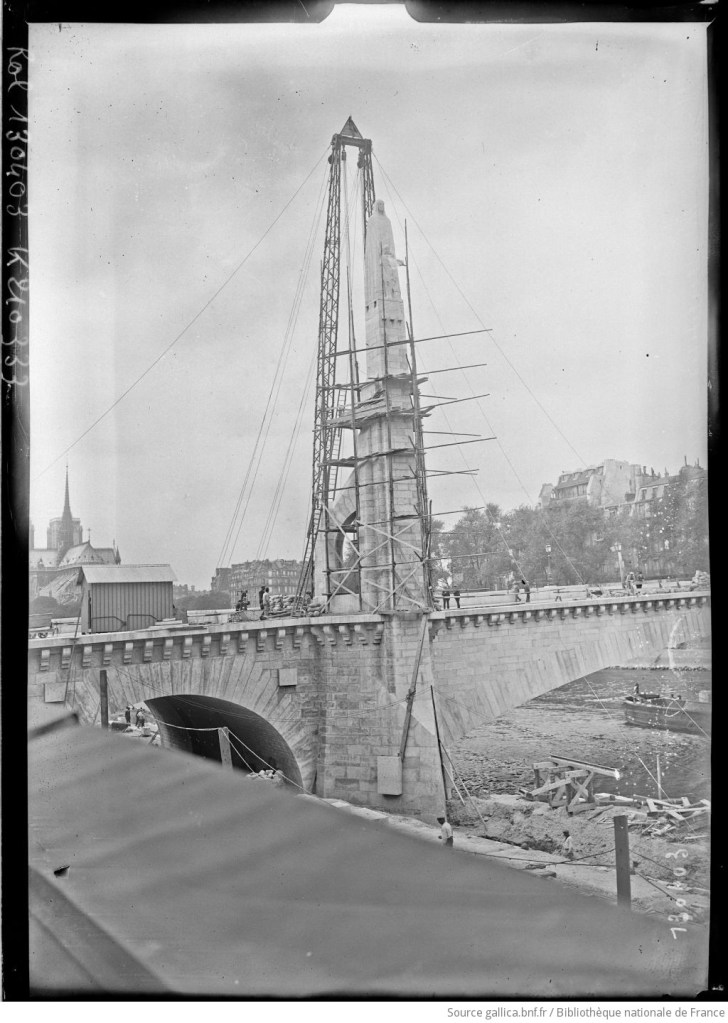
The current bridge exists much as it did in the 1920’s.
 L'Île Saint-Louis