Hôtel Bretonvilliers
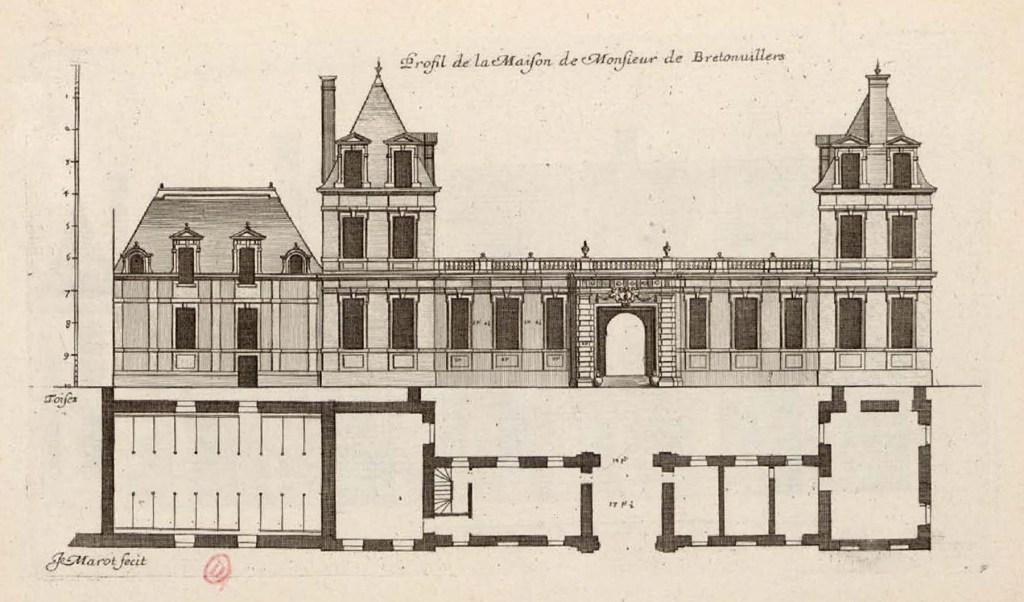
The Hôtel Bretonvilliers was once one of the most magnificent private homes in Paris. The home, a large estate, garden and six adjacent apartment buildings, was created for Claude Le Ragois de Bretonvilliers. The home, whose entrance was originally located at No4 rue Bretonvilliers, occupied the most prestigious lot on the island and encompassed all of the land on the south eastern tip facing directly upstream.
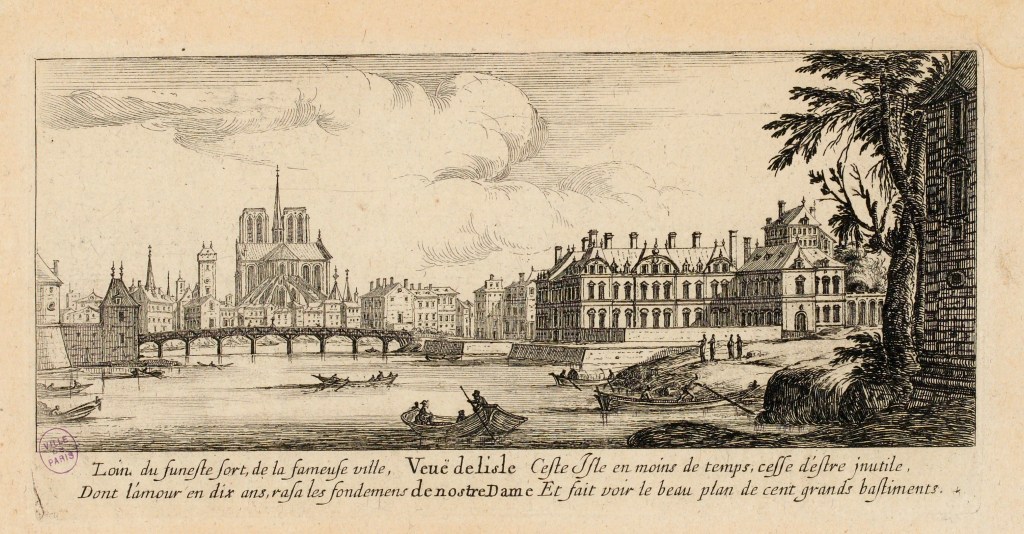
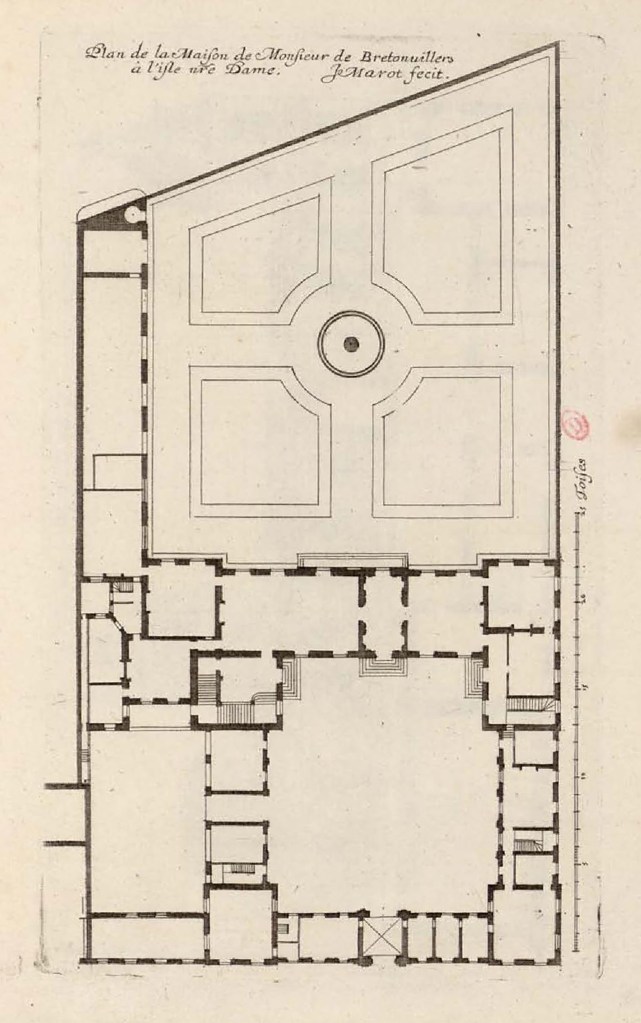
Bretonvilliers, a financier and secretary to the council of Louis XIII, and one of the richest men in France, commissioned the architect Jean Androuet du Cerceau to build the main house and Pierre Le Muet was engaged to build six dependencies.
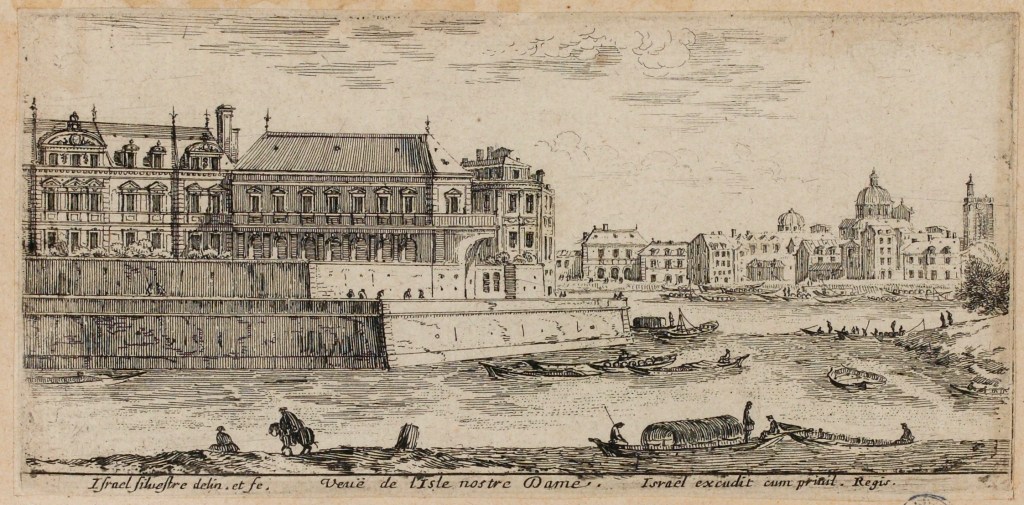
Construction on the home began in 1637 and the structures were completed by 1642. Decoration on the interiors was begun by Simon Vouet and later Sébastien Bourdon whose contributions would include the Grand Galerie. Claude Bretonvilliers died in 1643 and his wife, Marie Accarie, continued work on the home until her death in 1653. The Bretonvilliers son, Bénigne Le Ragois de Bretonvilliers, also continued to work on the home during his time there.
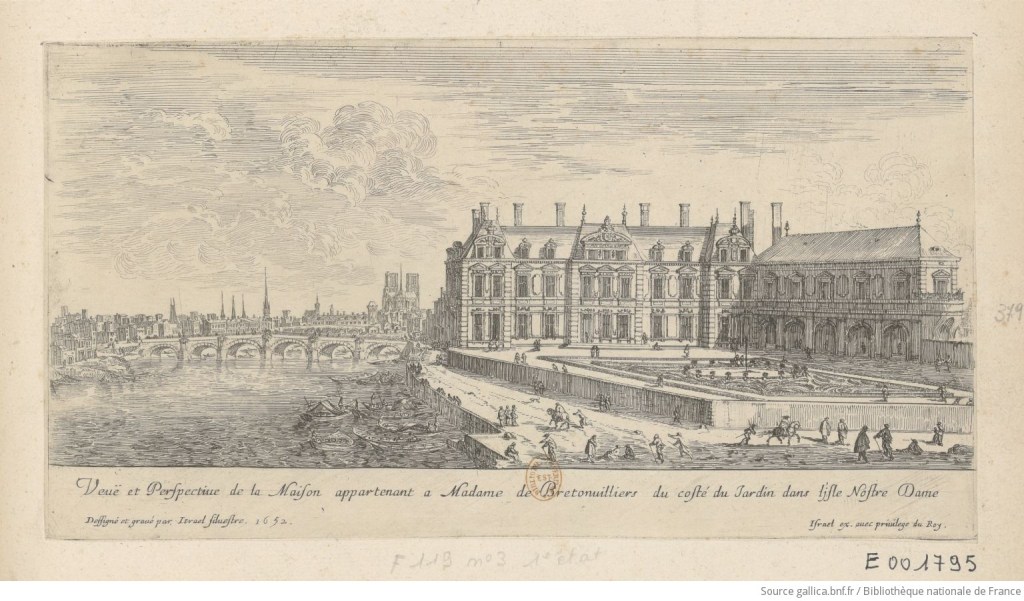
After Bénigne’s death in the early 18th century the home was rented to the Ferme Générale which collected duties on behalf of the King. It was during this time that Marin de La Haye, who lived in the neighboring Hôtel Lambert had offices in the building.
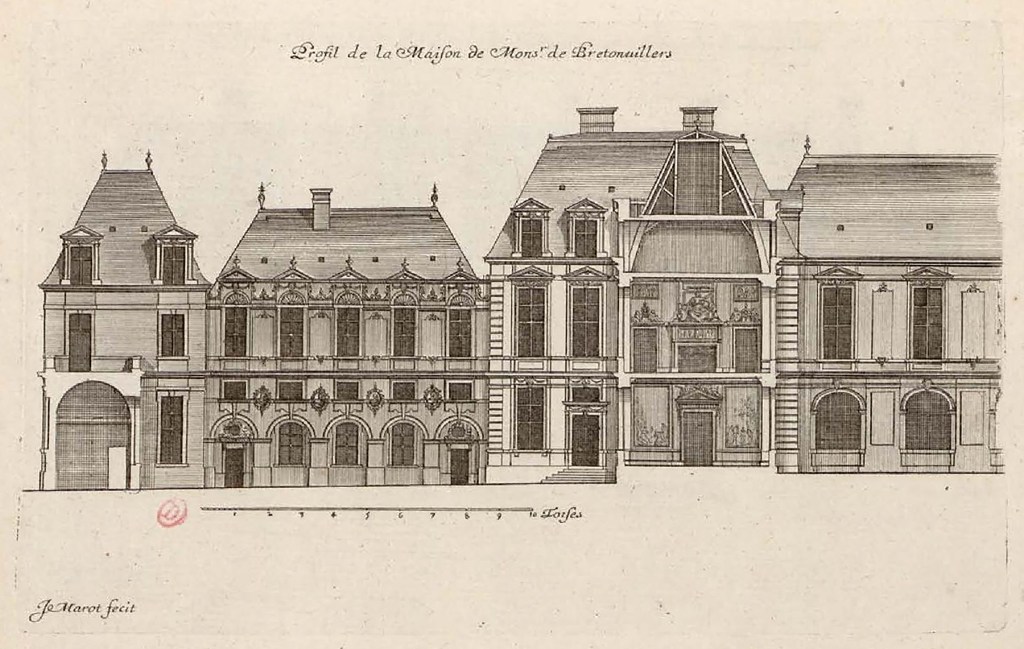
The Hôtel Bretonvilliers was seized in 1790 as part of the Revolution and during the latter part of the 18th century the grand mansion housed a printing works and a rifle factory.

The home was divided up and sold off in 1795, and the structures were slowly broken up and destroyed until the last few remaining parts of the structure and garden were swept away to make way for the Boulevard Henry IV and the Pont de Sully in the last half of the 19th century.
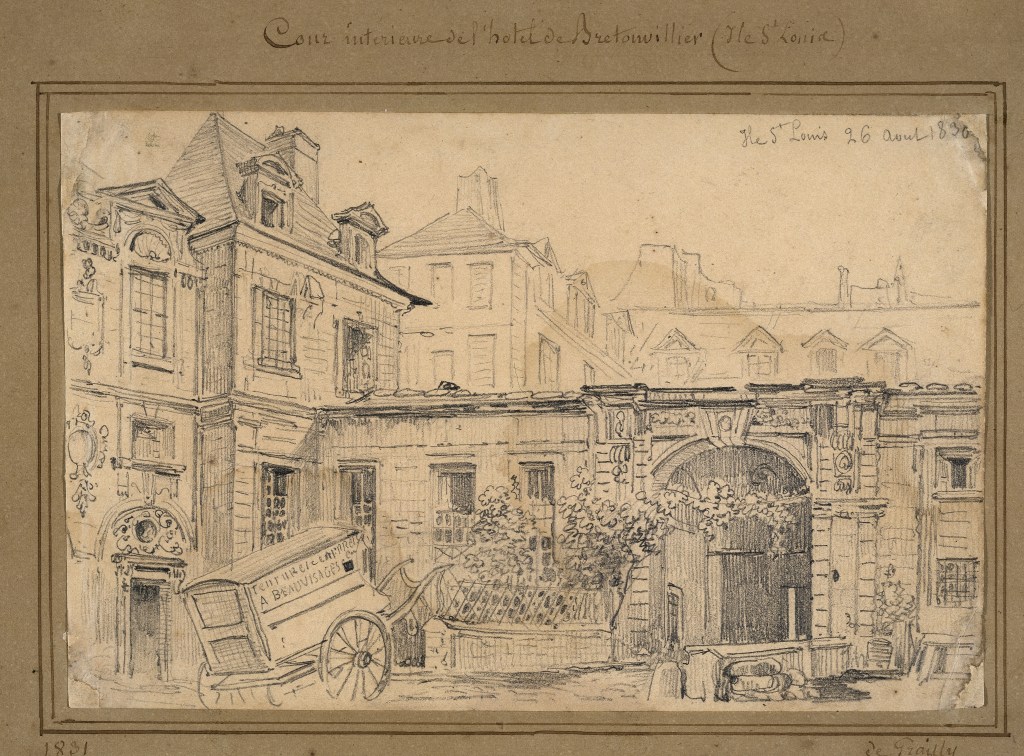
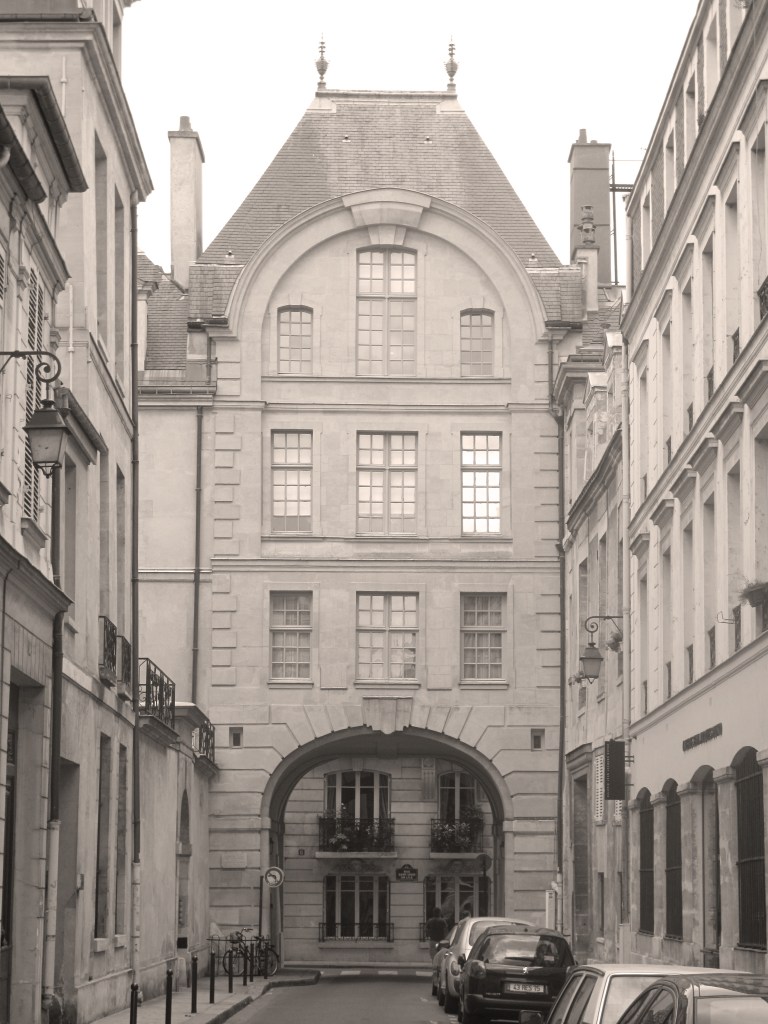
All that remains of the original hôtel is the pavilion that now straddles the entrance to rue Bretonvilliers. That structure has been a listed historic site since 1986. Some of the remaining dependencies of the Bretonvilliers remain however. Those structures can still be found at Nos 1, 3, 5, 7 & 9 rue Saint-Louis en l’Île.
 L'Île Saint-Louis