Église Saint-Louis en l’Île
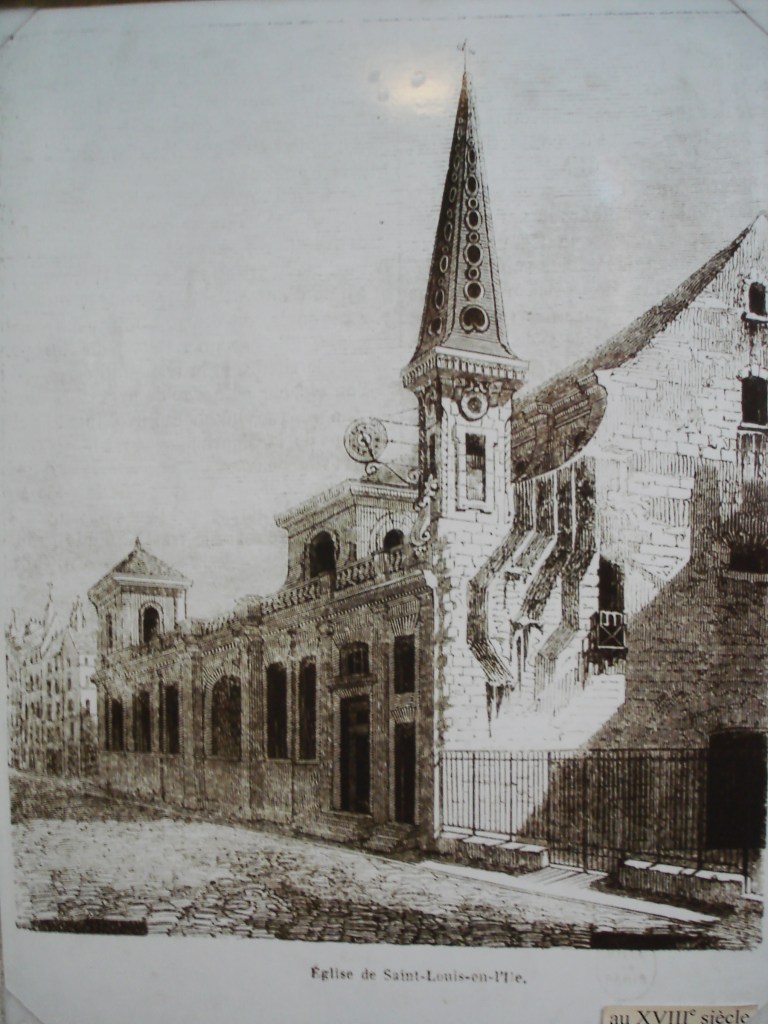
More than 4 hundred years ago around 1620 a small chapel ran perpendicular to Rue Traversante (now Rue Saint-Louis en l’Île) on the mostly undeveloped Île Nôtre-Dame. The chapel served sailors, woodworkers and washer women that labored on the bucolic island, but it quickly became too small for the island’s growing population after its development under Christophe Marie and his associates. Young King Louis XIII issued a decree in 1634 ordering the construction of a new church dedicated to Saint-Louis that would serve the burgeoning neighborhood and would stand on a corner lot of the rapidly evolving island.
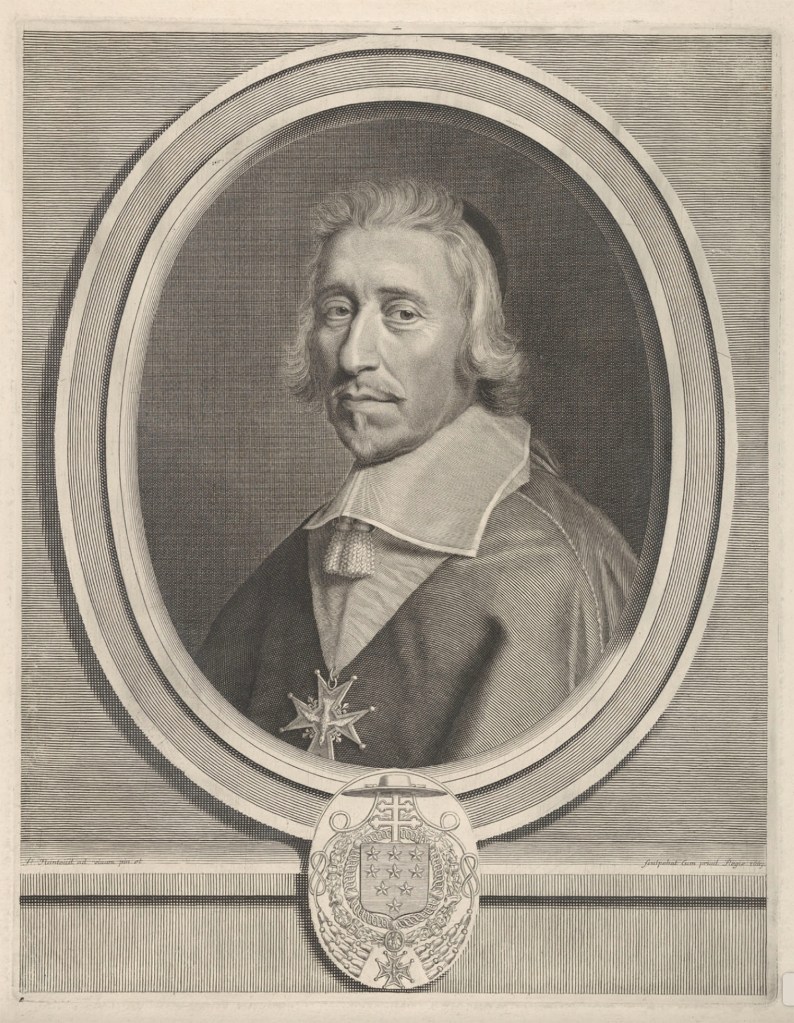
The cornerstone of the new church was laid by Hardouin de Péréfixe de Beaumont, the Archbishop of Paris, and work began on the new building in 1664.
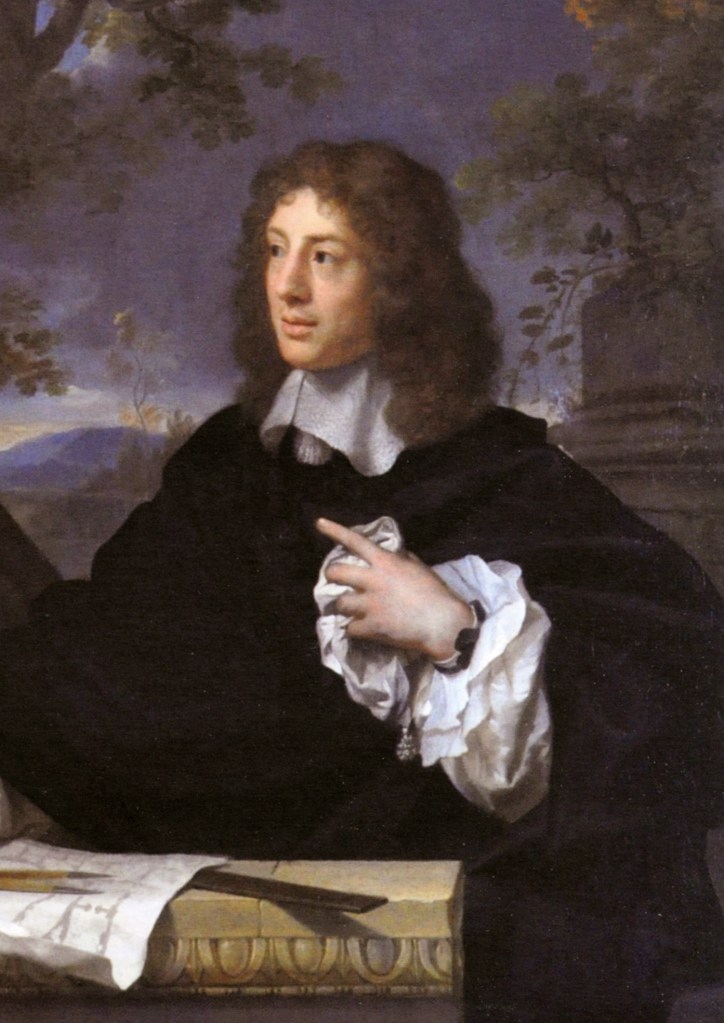
The initial structure was designed by François Le Vau who, along with his more famous brother Louis, was instrumental in the construction of many of the first grand homes built on the island. Unfortunately, Le Vau died not long after construction on the church began, and Gabriel Le Duc, the former architect of Val-de-Grâce in Paris, took over the project. Le Duc completed the choir of the new church connecting it to the old chapel which served as a temporary nave.
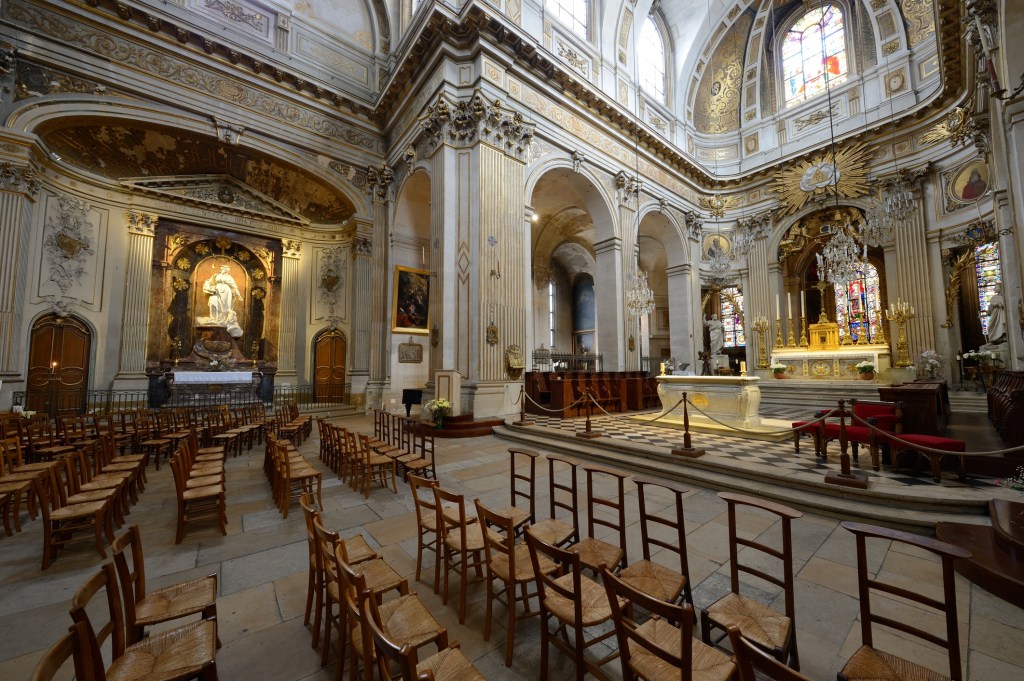
A hurricane destroyed the roof of the old chapel and severely damaged the nave in 1701, and in 1702 Pierre Bullet, the architect of the Porte Saint-Martin in Paris, took over the project. Nicolas Liévain, a master mason and Parisian contractor, drew up plans for the vault and completed the Communion Chapel. Jacques Doucet was then instrumental in completing the nave in 1723 and drafted the final plans for the transept and the dome which were completed in 1725.
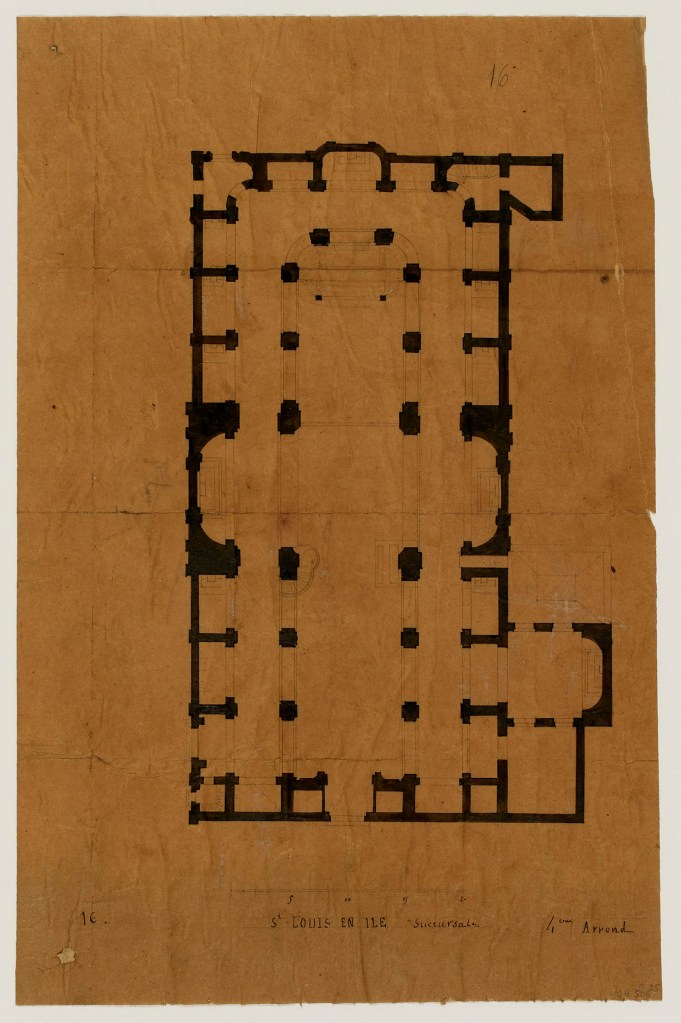
Plans for a traditional western front and square for the structure existed, but the many delays in the completion of the church allowed construction of other structures to occur on the western side, thus cutting off access to the church from that location. Executing the original plan would have required the destruction of several recently built structures, so the original plan was abandoned in favor of placing the entrance to the church along its northern side opening onto Rue Saint-Louis en l’Île which was unusual for the time. A clock suspended from the tower of the church indicates the church’s entrance, and the portal is decorated with a sculpture depicting two angels with outstretched arms representing Saint-Louis, the patron saint of the church.
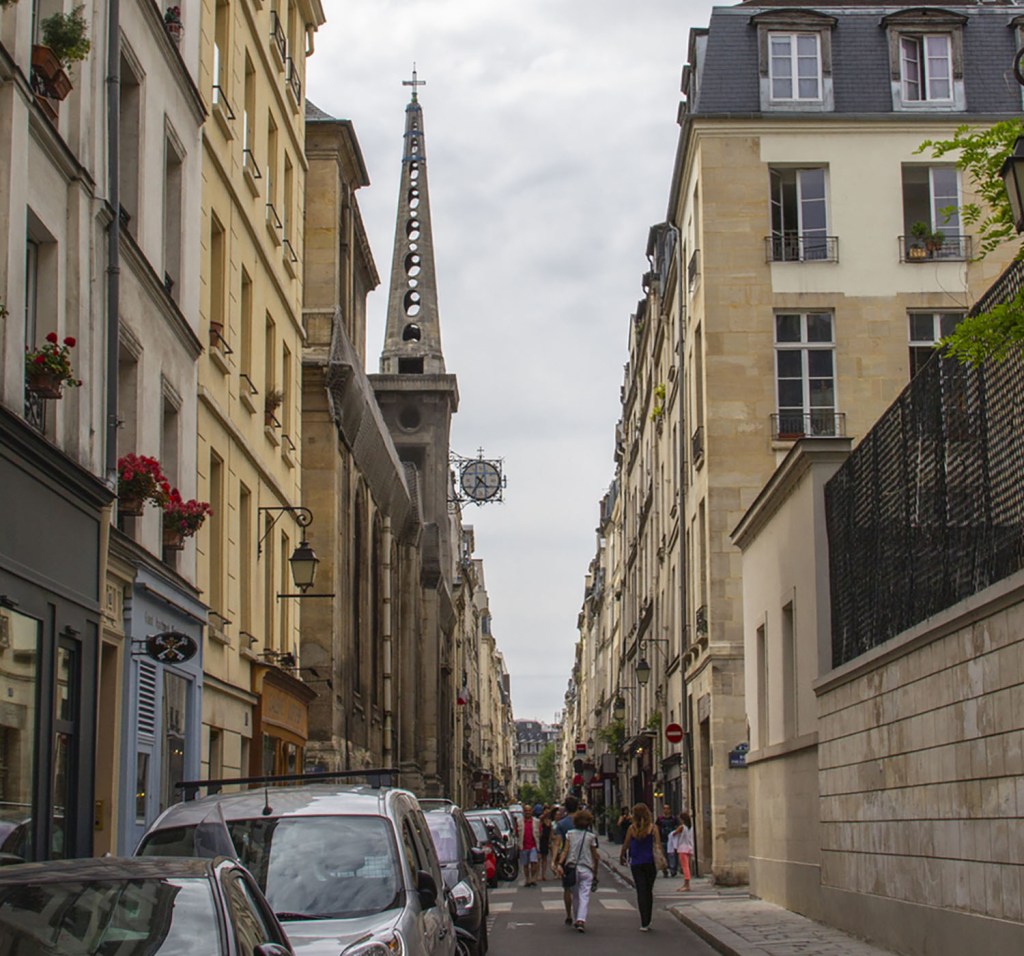
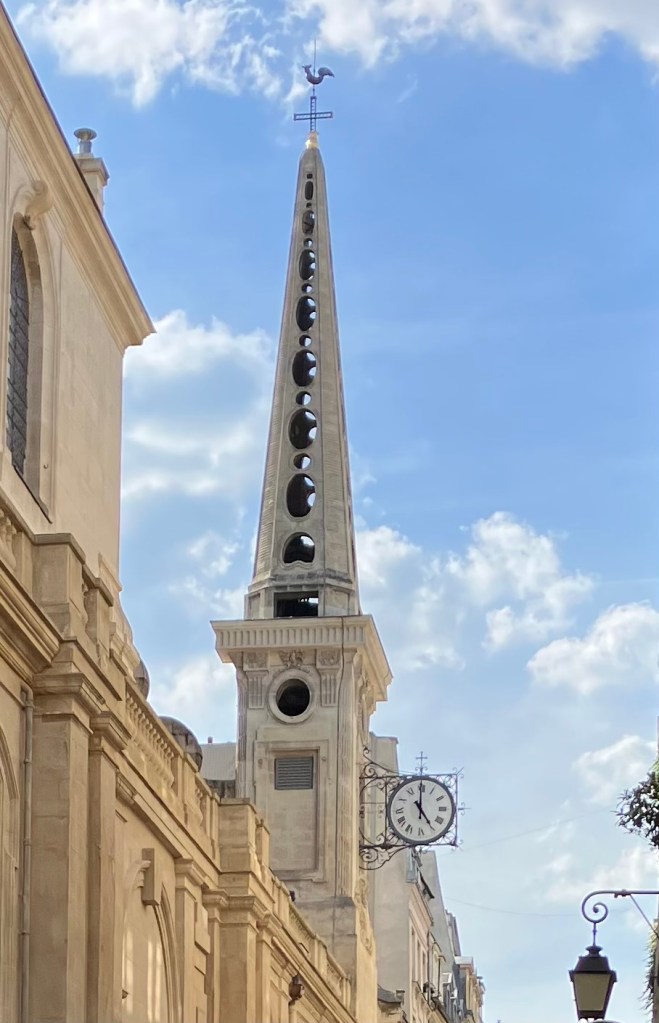
A storm in 1740 destroyed the original bell tower which was replaced by an open structure tower which allowed strong winds blowing off the Seine to pass through.
The church was finally consecrated on July 14, 1726 by Jean de Collet, Bishop of Grenoble, more than 60 years after the first stone was laid.
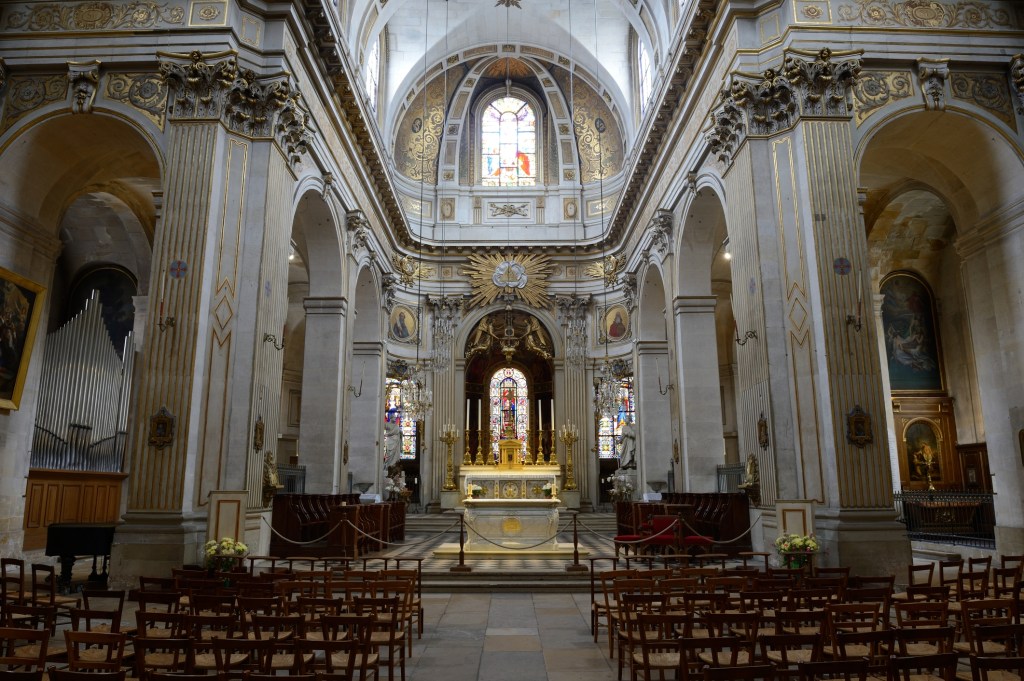
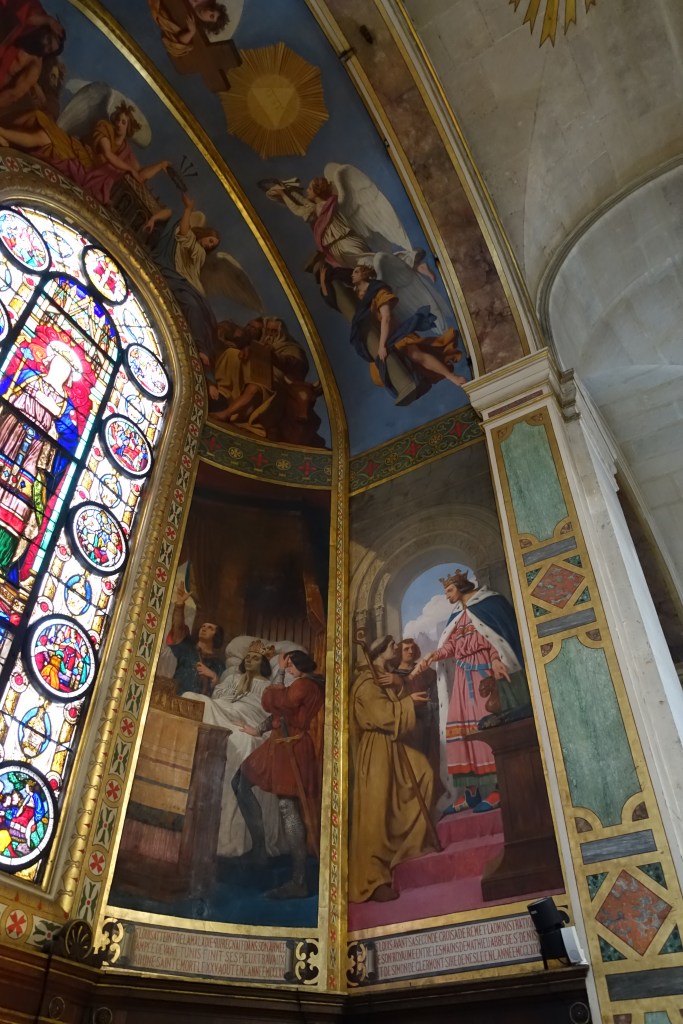
The church was stripped of its contents, and threatened with demolition during the Revolution in 1791 and was later used as a warehouse and sold off by the state in 1798. The building was purchased by a private individual who returned it to a church in 1805 and the first mass was celebrated there attended by Pope Pius VII who had come to Paris to crown Napoleon Emperor the previous year. The city of Paris purchased the building in 1817, and a long campaign was begun to restore the interiors led by Abbot Louis-Auguste-Napoléon Bossuet, the curé of the parish from 1864 to 1888. The clergyman sold his personal library to fund the restoration of the church’s gilding, murals, sculptures and stained-glass windows.
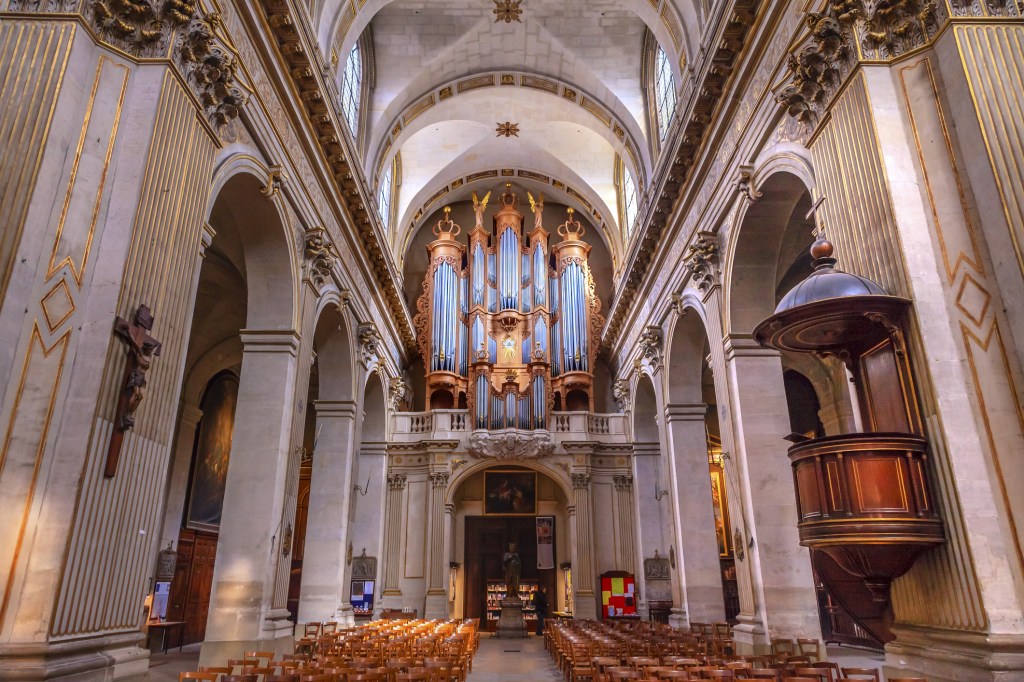
No trace of the original 17th century organ remains. It was replaced in the mid-18th century, but it was, like most organs of the time, dismantled and melted down for its lead to make munitions during the Revolution. A small organ was added to the church in the 19th century, but that organ was replaced in the 1920’s to be replaced again in the 1960’s. The current organ was completed and installed in the church by Bernard Aubertin in 2005, with funding from the City of Paris.
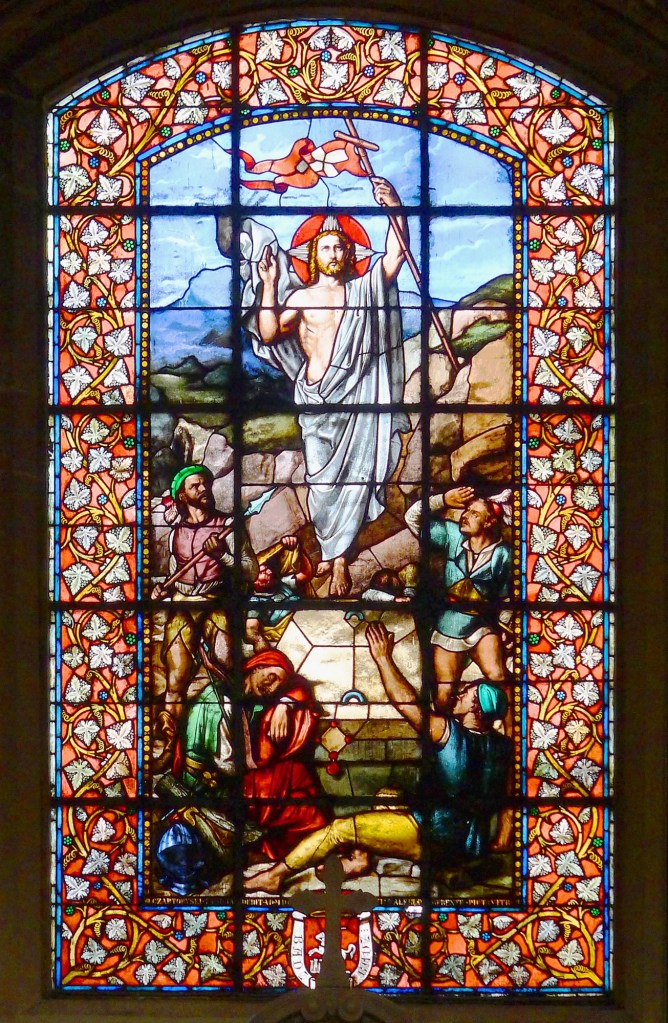
A major restoration of the church begun in 2018 was just completed. The project involved extensive restoration of the iconic stone bell tower, façade and buttresses, restoration of the slate roof and roof structure, and improved access for the roof and attics, including an ungraded monitoring system. The stained glass windows in the upper bays were also restored.
The restored Église Saint-Louis en l’Île continues its history into the 21st century as an iconic landmark on the island, while also remaining an enduring example of exquisite 17th century Baroque style.
More information on the church and its concert series can be found via the link below and also in the culture menu on the main page. https://www.saintlouisenlile.catholique.fr/
 L'Île Saint-Louis